
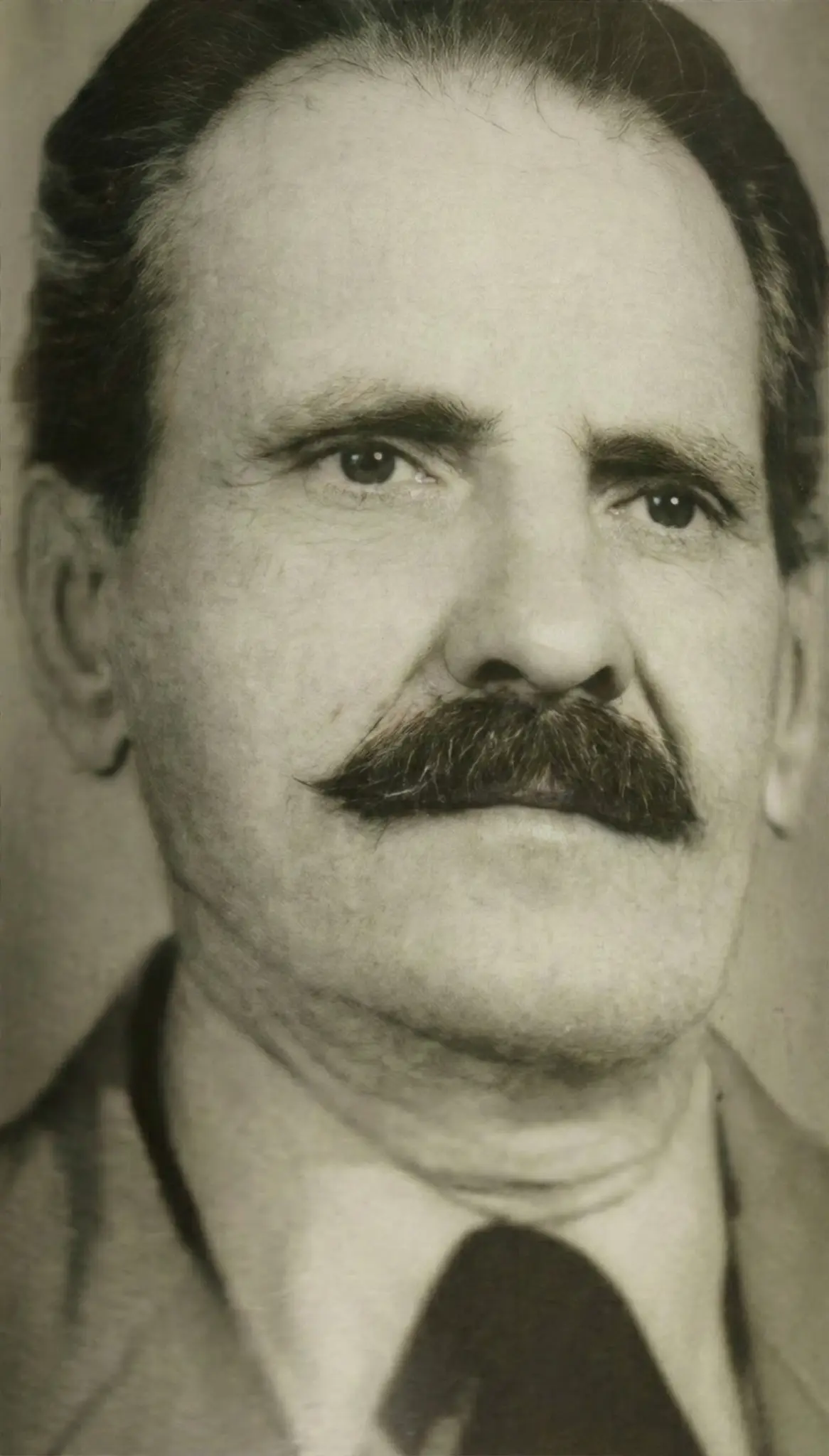
Epaminondas Lampreas
1920 – 2005
Barrel MakerCultural PreservationistOral Historian
The Story of Epaminondas Lampreas
Epaminondas Lampreas, also known as Nontas, was a general carpenter and cooper, whose craftsmanship was exceptional. He was considered a very good craftsman, perhaps the best, and was fast at his work, having even set a record in barrel making with the help of his son, Stavros. He maintained a workshop in Kato Rouga in Exochori, where his wife was, and another one in Pripitsa, which had belonged to his father, Old-Stavros, who was also a carpenter.
He apprenticed with various masters in the mountains, such as Old-Mastrampis and other old coopers, and then developed his skills on his own, becoming a master at the age of about 15. He operated the workshop in Pripitsa before the war and before he got married. Later, in Exochori, his workshop was located in a neighborhood that was like a "closed club" of 2-3 master woodworkers, such as Ntogéas and Old-Kostas Galinéas.
In addition to barrels, Epaminondas also made various small household items, such as the famous wooden jugs, which he did not sell but gave as gifts to various people. As a good and skilled cooper, he would not lend his cutting tools to just any craftsman, but only to famous coopers.
At that time, there were about 30 craftsmen and assistants in the area, but only 5-6 were famous and good. In Exochori, besides the carpenter and cooper workshops, there was also a blacksmith's shop next to the school, as well as olive presses before the village's olive oil cooperative factory was founded. Many buyers came from various villages of Mani, because there were no coopers in other villages, not even in Kardamyli.
Epaminondas Lampreas, also known as Nontas, was a general carpenter and cooper, whose craftsmanship was exceptional. He was considered a very good craftsman, perhaps the best, and was fast at his work, having even set a record in barrel making with the help of his son, Stavros. He maintained a workshop in Kato Rouga in Exochori, where his wife was, and another one in Pripitsa, which had belonged to his father, Old-Stavros, who was also a carpenter.
He apprenticed with various masters in the mountains, such as Old-Mastrampis and other old coopers, and then developed his skills on his own, becoming a master at the age of about 15. He operated the workshop in Pripitsa before the war and before he got married. Later, in Exochori, his workshop was located in a neighborhood that was like a "closed club" of 2-3 master woodworkers, such as Ntogéas and Old-Kostas Galinéas.
In addition to barrels, Epaminondas also made various small household items, such as the famous wooden jugs, which he did not sell but gave as gifts to various people. As a good and skilled cooper, he would not lend his cutting tools to just any craftsman, but only to famous coopers.
At that time, there were about 30 craftsmen and assistants in the area, but only 5-6 were famous and good. In Exochori, besides the carpenter and cooper workshops, there was also a blacksmith's shop next to the school, as well as olive presses before the village's olive oil cooperative factory was founded. Many buyers came from various villages of Mani, because there were no coopers in other villages, not even in Kardamyli.
Testimonials
Epaminondas was like a living library of Mani. He could tell you the history of every stone, every path, every family in the region. His loss is immeasurable.
Without Lampreas's work, so much of our heritage would have been lost forever. He understood that our traditions were treasures worth preserving.